
Australia’s largest boards are rich in financial expertise — but are they missing the skills needed to navigate today’s business landscape?

Australia’s largest boards are rich in financial expertise — but are they missing the skills needed to navigate today’s business landscape?
Boardrooms across the country are facing rapid change. Economic conditions are shifting, technology is evolving and expectations around board capability are growing. But the skill mix on ASX300 boards suggests an imbalance, with several critical areas still under-represented.
Across ASX 300 companies, the most common director experience lies in economics, international work and accounting. These capabilities are essential for governance and oversight, but the lack in other areas suggest boards are either appointing from the same talent pool, or not making enough effort to diversify their skills.
OpenDirector data provides valuable insights into board composition, including analysis on the top skills required for effective Governance. Set against the demands of today’s business environment, our data highlights a range of areas where the top boards are falling short.
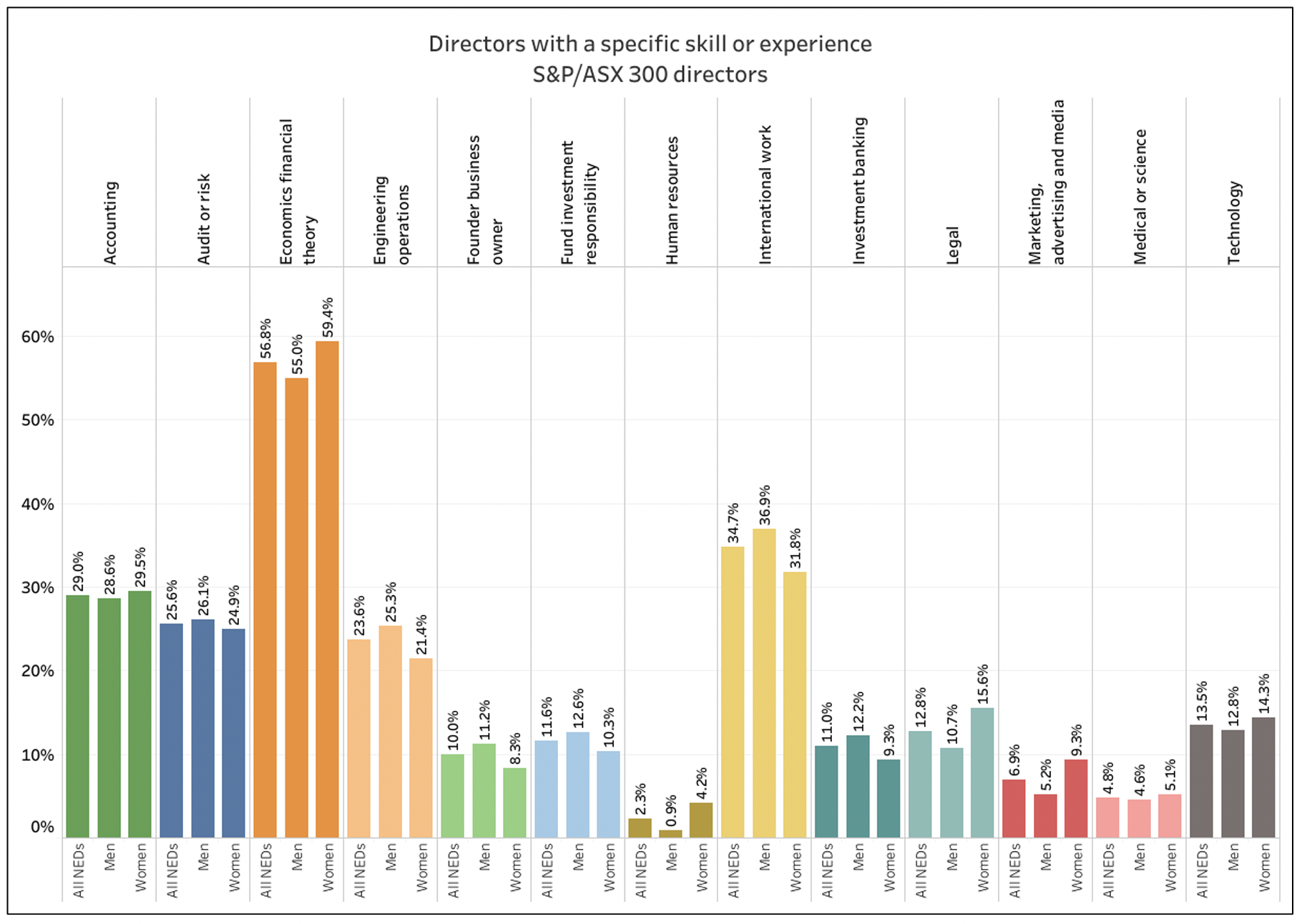
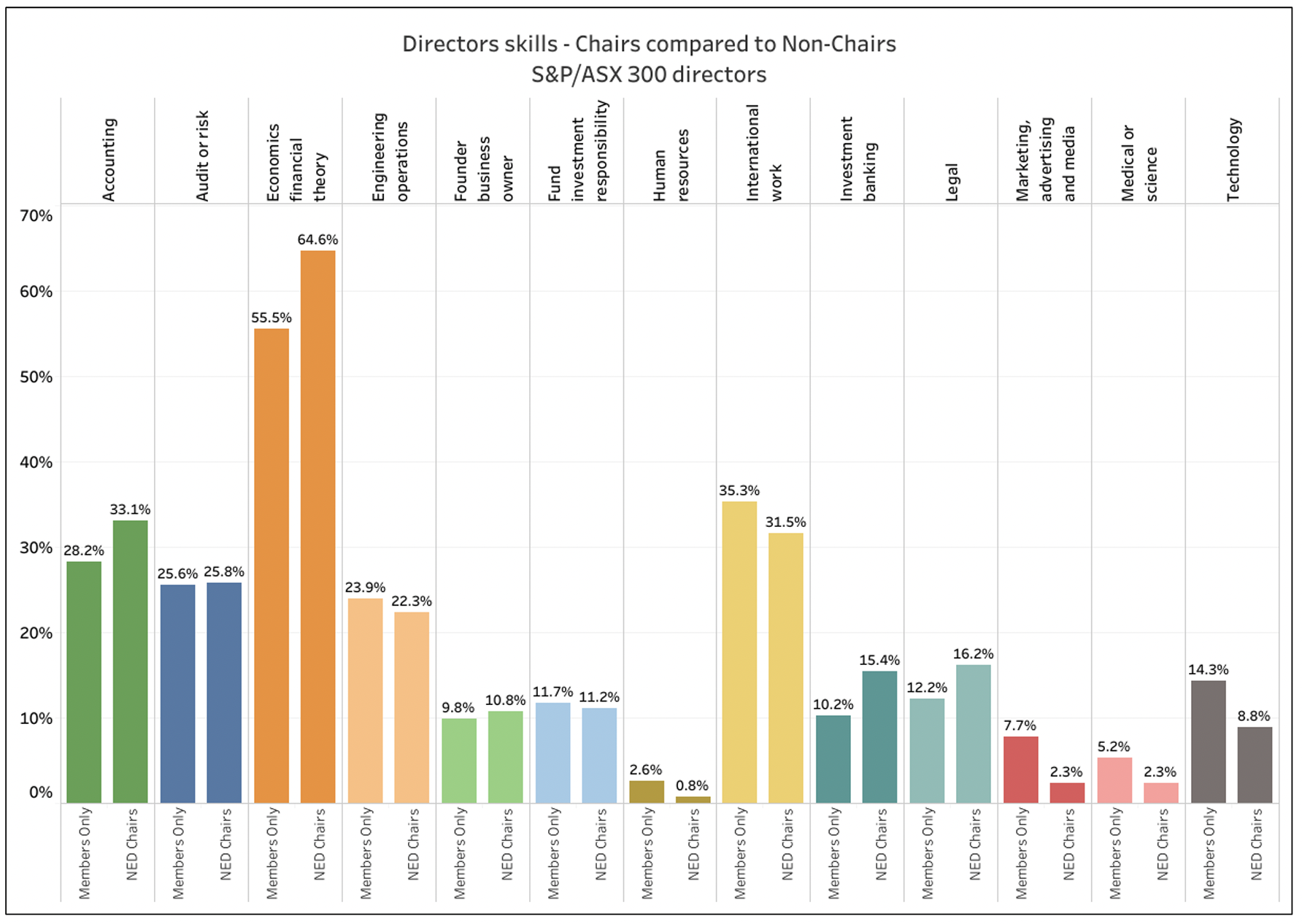
Despite growing digital transformation, the rise of AI, and increased cyber and data risks, technology remains one of the least represented skills in the boardroom. Only 13.5% of directors on ASX300 boards and 8.8% of chairs have skills in technology.
Customer experience and market positioning are playing an increasingly central role in corporate strategy, however only 6.9% of directors on ASX300 boards have skills in marketing, advertising and media.
The least represented area in top Australian boardrooms is Human Resources. Only 0.8% of board chairs have experience in human resources, despite talent strategy and culture now being recognised as key drivers of company performance. 4.2% of women on ASX 300 boards have HR skills, compared with 0.9% of men, outlining a slim yet notable gender difference in this area.
With rapid technological disruption, shifting workforce expectations and changes in customer behaviour — now, more than ever, a broader skill diversity is needed across boardrooms.
Financial acumen will always remain fundamental to strong governance. But the data suggests many boards may benefit from a broader mix of capabilities, particularly in areas such as technology, people leadership and customer strategy.
For companies looking to strengthen board effectiveness, attention is moving beyond financial expertise to the skills still missing around the table.
Data extracted from OpenDirector platform
